Free Printable Animal Adaptations Worksheets for Grade 1
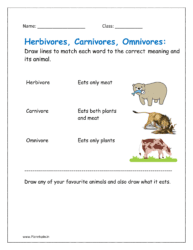
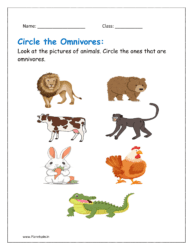
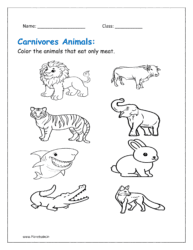
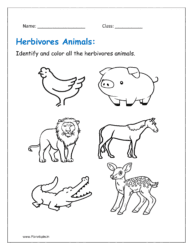
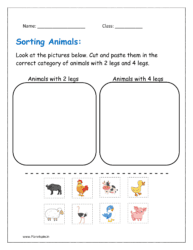
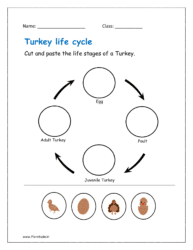
Help Grade 1 kids learn how animals are adapted to the places where they live with these Animal Adaptations Worksheets. These printable science worksheets introduce children to simple animal adaptations and show how body parts, behaviors, and other characteristics can help animals survive in their environments.
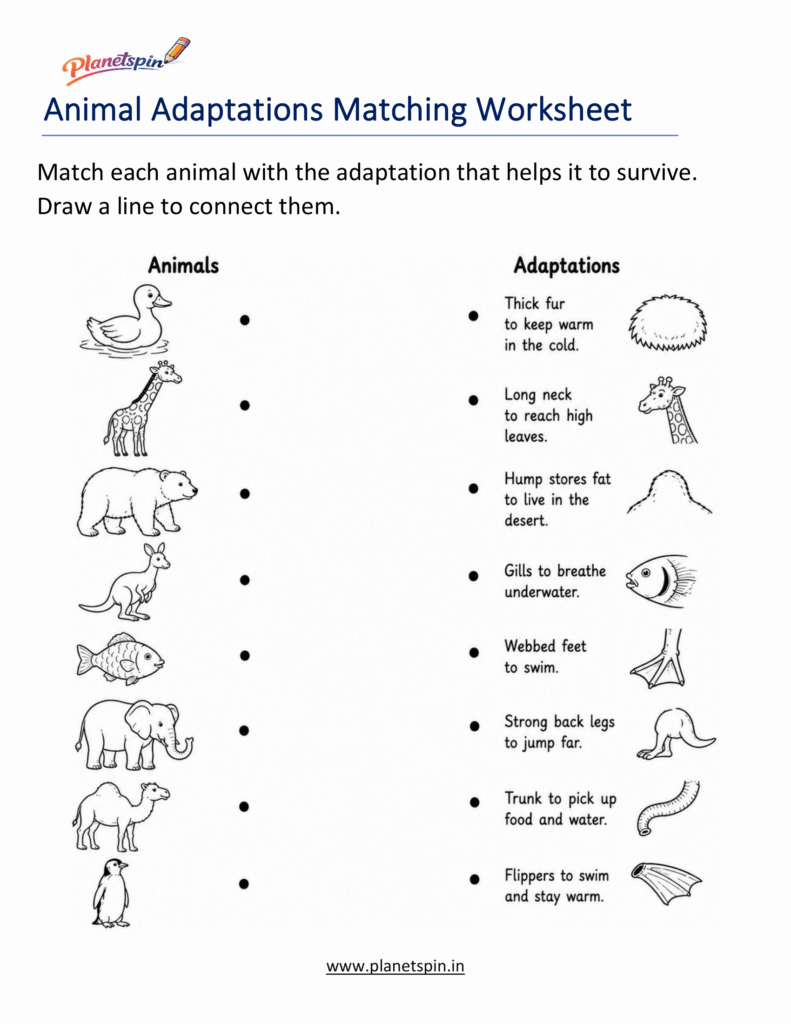
Students can identify animal adaptations, match animals with useful body features, compare adaptations, and connect animals with their habitats. Familiar examples such as a polar bear’s thick fur, a giraffe’s long neck, a duck’s webbed feet, and a turtle’s shell make these activities easy for young kids to understand.
Children can understand where animals live with these Animal Habitats Worksheets. Also, learn what animals need to survive with these Animal Needs Worksheets.
Download more similar Animal Adaptations Worksheets
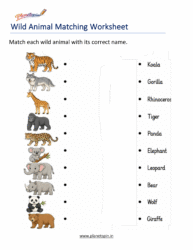
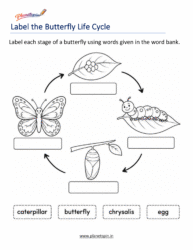
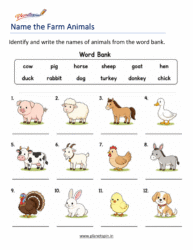
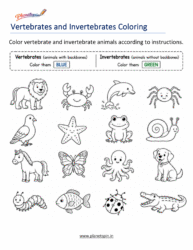
Through matching, sorting, labeling, comparing, and picture-based activities, children can explore adaptations such as webbed feet, thick fur, shells, sharp claws, long necks, and other useful traits.
These animal adaptations worksheets are ideal for classroom life science lessons, independent practice sessions, homework, and homeschool learning.
The objective of these worksheets is to help children understand the connection between animal → adaptation → habitat → survival.
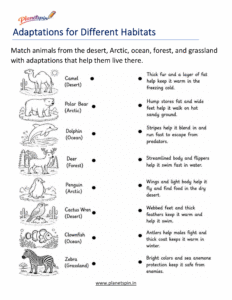
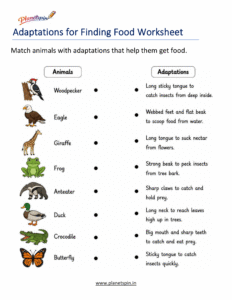
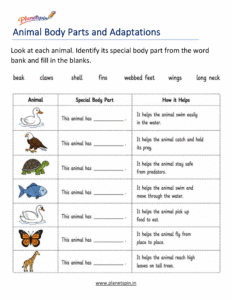
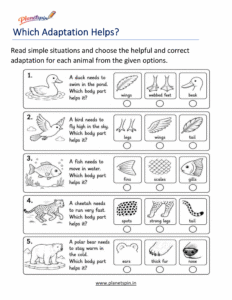
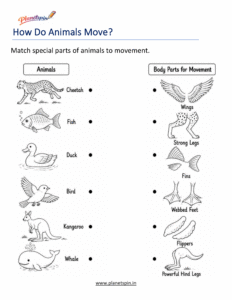
What’s included in the worksheets:
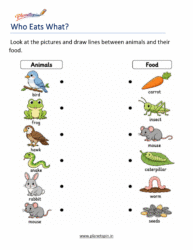
- Students match each animal with the feature that helps it survive. For example: Duck → Webbed feet, Polar bear → Thick fur
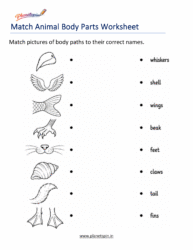
- Students identify body parts that help animals live in their environments. For example: Beak, Claws, Feet, Fur, Shell, Tail, Flippers, Wings, Teeth
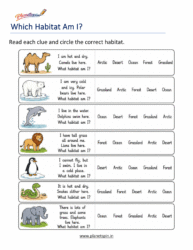
- Students match animals to both their habitat and useful adaptation. E.g. Fish → Water → Fins
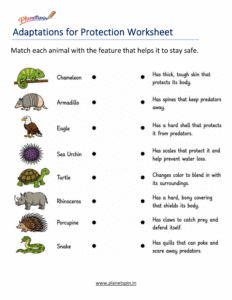
- Students learn that some animals have colors or patterns that help them blend into their surroundings.
- Students use a word bank to complete simple science sentences. E.g. A duck has __ feet that help it swim.
- Include simple science riddles. I have webbed feet and I can swim. What am I? (Answer: Duck)
Learning Objectives
After completing these worksheets, children will be able to:
- Identify simple animal adaptations.
- Identify useful animal body features.
- Match animals with their adaptations.
- Connect adaptations with habitats.
- Identify adaptations related to movement and feeding.
- Compare adaptations among different animals.